Umačem
otrovne strelice u
osmeh
Author Archives: leilasmtrajkovic
Uskoro u bioskopima. Nastavak “Avantura Borisa K.”
USKORO U BIOSKOPIMA, NASTAVAK AVANTURA BORISA K.
Jedan čovek. Jedan problem. Jedan način da se reši – Boris K.
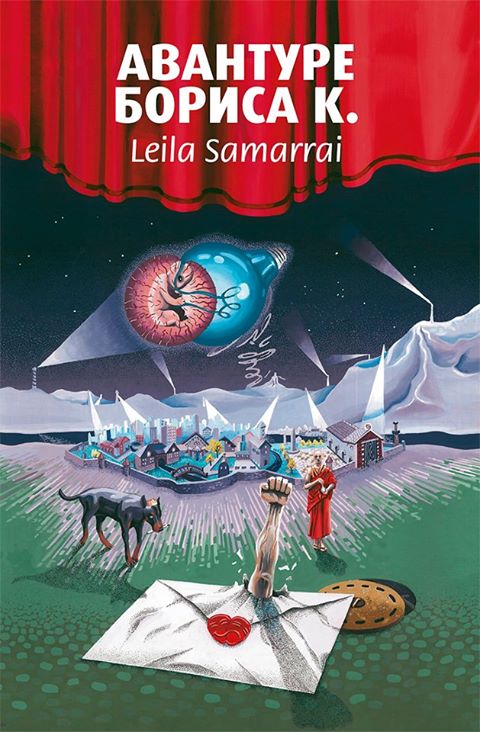
https://belegbg.wordpress.com/2013/05/24/leila-samarai-avanture-borisa-k/
Radovi su u toku…

image found here
“Cats”/”Mačke”
This is one of the many versions (The Introduction) of my drama play “Cats”. There is a final version, of course, it is printed, but due to some kind of miracle, it is not in the computer, so I should type it again. Drama is intended for reading, and this version is slightly longer, so this task is constantly postponed. Anyway, I was looking for something in mails, then I came across this version which is not as good as the one after.. but still made me laugh.
I’m sorry I can not give you present texts in English (for now), my translators (Scylla and Charybdis have some unfinished business with satan in Styx at noon (reviving the dead and translating them something like… corpse never dies and other Meow – Poetry Of Hell in Hebrew and Hungarian – Finnish) They shall be back in couple of centuries, till then, wait and see – I’ll manage somehow. Try to use google translate!

image found here
MAČKE
Leila Samarrai
Scena 1
NEBESA
(Sv Petar prekrštenih nogu sedi u Edenu, ispred Rajskih vrata na stolici od hrastovog drveta sa gusto isprepletanim gravurama krstova. Revlon remom lašti go go čizme. Našminkan je kao Azijatkinja, dok u haljini Đovani sluša poznatu ariju opera Madam Baterflaj. (na video bimu prikazana scena iz opera Madam Baterflaj) Nosi rej ban naočare I pije kafu iz kutije na kojoj piše Energetska Kafa dok prelistava katalog ženskih perika iz Hongkonga. ..) Na okruglu stolicu na kojoj sve Petar najčešće sedi dok se ogleda u stilizovanom ogledalu od višnjinog drveta rajske modne kuće “Taština” sleće Emanuilo, pakleni lađar, koji izgledom podseća na Grejs Džons.)
EMANUIL:
O, Petre sveti, slomilo mi se veslo dok plovih Stiksom vrelim. Ukoliko mi ne pomogneš, Raj mi ne gine!
SV PETAR:
Rekao sam ti da za paklene vožnje koristiš rajska. Ona su čvršća. Sačinjena od čistog vatikanskog zlata.
(kuca na računaru)
Jedno rajsko veslo za lađara pakla.
EMANUIL:
Petre, do sad sam sumnjao, ali sad znam da si mi pravi prijatelj. Izvukoh se. Za dlaku!
(SV PETAR I EMANUIL se zagrliše)
SV PETAR: (dok ga grli)
Biće mi potrebna protivusluga.
EMANUIL:
Uvek… i.. skloni ruke sa moje zadnjice.
SV PETAR:
Ovo ti je treće u nedelju dana? Problemi u paklu? Podsvesna želja da postaneš rajska pastirica?
EMANUIL:
Tako mi I treba kad prevozim Ruse. (sa divljenjem zagleda u novo, zlatno veslo koje mu je doneo heruvim) I to nikog drugog do Ivana Prvog Kalitu, autokratu ciciju u istom čamcu sa Judom.
(SV PETAR se prekrsti)
EMANUIL:
Želi da se vrati na Zemlju kako bi dao trideset srebrnjaka u dobrotvorne svrhe.
SV PETAR:
Zadivljujuće.
EMANUIL:
Tek što dođosmo do sredine mračne vode, zatražih obojici kaparu, ali Rus nije hteo da mi plati, već mi ot’e veslo iz ruke, slomi ga I gurnu me u Stiks. Tada začuh potmulo režanje praćeno žuborom vode, žuboritije od kipećeg Stiksa..
SV PETAR:
Iju! Pa šta se to ču?
EMANUIL:
To je Sotona pevao pod tušem. Pomislih šta bi se desilo da sazna, uplaših se I vratih Judi srebrnjake.
PETAR: (uzdiše)O, Emanuilo, pa zar svih trideset?
EMANUIL: (izdiše)
Svakodnevno sam na iskušenju da pokojnicima koje prevozim otimam novac, ali bojim se da me Ničnižnji ne vrati među žive, ako sazna da mu diram u kasicu prasicu.
SV PETAR:
Emanuilo, to I nije tako loše! Kad si živ, onda možeš da podigneš keš kredit u Poštanskoj štedionici Srbije!
EMANUIL:
Kažu da tamo prednost imaju preminuli.. Uostalom, miliji su mi večni krediti na odloženo plaćanje.
.
“I was told to drop dead”, Leila Samarrai

image found here
I was told to drop dead
Drop dead!?
I – who shatters you upon a lupine rock
I – who kills you with the breath of breeze
I – who holds your hair inside my palms
I – who do not hear your supplications and don’t know them
I – who carry the roar of waves within my furious brain
I – who crush you with cheekbones of oak
I – in front of who you hop like maddened dervishes
I – before who Samara resurrects from the dead
I – for whom the rocks groan from pain
I – before who Caesar scrapes his white knees
I – who carry in my chest a heart with twelve ventricles
I – who breastfed Romulus and Remus
I – who murdered Caligula during Palatean games
I – who break flesh and eat your bones
I– who turn honey into a new pillar of salt
I – who extract the uterus from the moon
I – who poison your bodies with breast milk
I – who tear tendons with ruby lips
I – who knock you down with words of great-genesis
I – who am a wind which topples giants with my treading
To me you tell to drop dead!?
Leila Samarrai: THE ADVENTURES OF BORIS K, Intro
Leila Samarrai
THE ADVENTURES OF BORIS K
Веlgrade, 2013.
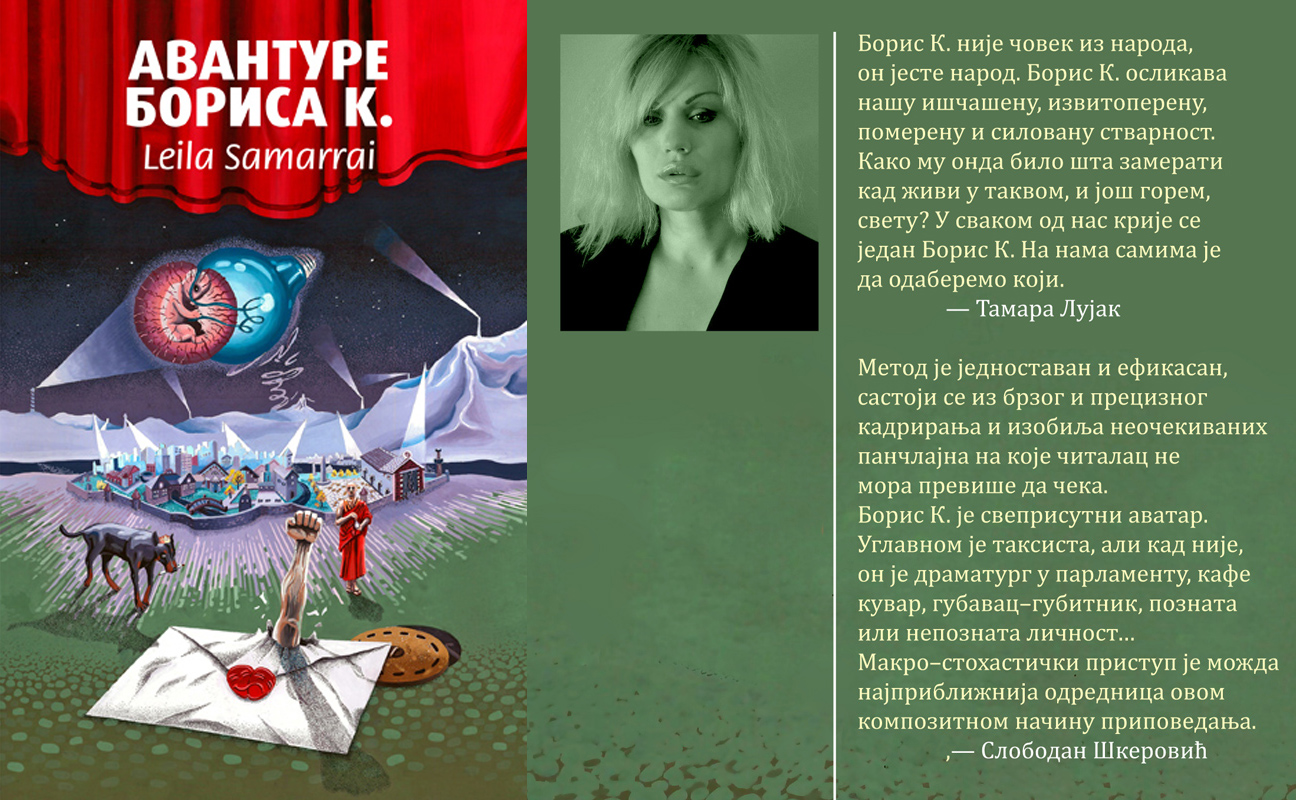
Contents
Persons, participants, extras, casual mentions, not-quite-unimportant, perhaps even crucial for the story although (seemingly) collateral, many of whom never appear but are always present – the personifications of context.
Author’s note
Names of political parties
PCP = Party of Conscientious Prosperity
The Communist-Capitalist Conjunction
Coalition YOUR CHOICE
The Rationally Humanist Party
The Labour-Anarchist Team
The Vocal Party
Coalition SERVICE
CURSE — Communist Ultra Resident Suburban Entente
SCOURGE — Solvent Communist Offspring Union Relevantly Guiding Employees
The Noteworthy Personnel Party
GAOLS — General Alliance Of Lawabiding Socialists
Introduction: The Life and Tribulations of Boris K.
A stone’s throw from a large river, a paradise on earth was built. According to the media in the friendly Uganda, it was a small country – an oasis of peace among the lighthouse-studded hills. The earth was a shimmering white, as if illuminated by numerous torches; the sky was imbued with various shades of pink. If one was to look at the majestic city from atop a hill, the Republic would have appeared utterly bared in its beauty. People compared it to Ancient Rome, Ancient Egypt and Alexandria, and many reminisced about the golden gates of the city which opened automatically, dousing the newcomers in a veritable deluge of cash. What the visitors did not know, however, was that, once inside, they would never be able to leave the city. There was but one city gate, and it was heavily guarded. The aforementioned notwithstanding, Citizens were regularly assured by the local media that the Sun, indeed, shone its very brightest in their country, and that its people were – without a shadow of a doubt – most content with their lives and lots.
Following one lavish speech by a certain Member of Parliament – the wealthiest man in the City, who spoke to the people without prevarication, with a lofty style and his head held high – the Republic was named Phenomenublic. His speech was so eloquent and inwrought with poetry.
Many people disliked this flamboyant style and immediately left the premises. Thus they missed on learning about phenomenization.* Yet this citizen, this idealist (to some extent, yes, even a revolutionary), this billionaire, this poet, did not miss the chance to open the door of Knowledge for his fellow Phenomenublicans, describing the terrifying effects of phenomenization with all its limitless powers in his work titled “Res Publicus Phenomesationes, in which he defined this, to put it mildly, unusual occurrence.
If a foreigner was to enter the Republic, he would take one look around and realize that the Republic was not quite what it had seemed. Parts of the city looked sophisticated, some of the sidewalks wrought in solid gold. The buildings were brand new, and the list of reforms published on the eye-catching billboard aprawled across the government building (formed by the coalition of leading parties – CURSE /Communist Ultra Resident Suburban Entente/ and SCOURGE /Solvent Communist Offspring Union Relevantly Guiding Employees/) grew longer by the day. Stepping around the handful of newly built edifices, however, the traveler would find himself staring at ruined asphalt pockmarked with manholes.
Behind those, caught in a strange trance verging on insanity, toothless beggars would emerge with blindfolds over their eyes. Within the shadows of multiple stairways, the narrow streets hid their leprous residents feeding on refuse – those were the losers of phenomenization. The winners – strictly for the greater good, of course – spun stories of the brighter future for these wretches, attempting to allay any and all thoughts of ire, offensive or revenge.
“Dear losers, rejoice! For hunger is the mother of ingenuity and without your leprosy there would be no splendour of this City. It is all, as Buddha had said, just one big spiral going from one extreme to another only to stop in the middle.” And the Losers were satisfied. The greater their satisfaction, the bigger their chances were of becoming clerks or venal top dogs.
“We strongly recommend a bird brain,” the authorities advised a Loser with a scheduled frontal lobotomy. “You will make a grand Minister of health one day,” they’d say.
Mere visitors, however, knew not the secret of this land – it was known to the Grand Pulpiteer alone. To all questions like “Are those just ragamuffins who will put up with anything as they wait, stuck in a manhole, for the arrival of better days ?” he would answer thusly: “Each and every one of them is infinitely more avaricious, infinitely more hypocritical, than any of those living upstairs in their golden pavilions. You should be aware, my good people, that all the mighty patricians you pout and glower about used to live in manholes once. The roles change, it is only I that remain the same,” whereupon he would laugh and fall into the sweetest of dreams.
II
Preparations for the memorial service were well under way in the Phenomenublic – dully covered by the daily newspapers Informer,The Phenomenublic News and each and every one of the 76,548 Phenomenublican TV stations.
“Boris K has died – a bohemian and an intellectual, a Loser with no regular occupation, declared redundant. Penultimate among the last, or so it has been said, yet once upon a time the ultimate coffee bringer. A seasoned communist and ‘the most eminent of glass cutters’, an honorary member of the Nutritionist Association. His faithful admirers flock in from the remotest of areas… Members of the Losers’ Party are expected to attend the funeral; the widely famous State Jester will be performing fairy tales in the style of One Thousand and One Nights, sponsored by the publishing house Scheherazade & daughter,” thundered from the loudspeakers mounted atop the Phenomenublican government building.
The news were received with no small amount of surprise, as Boris K. was known to be healthy as a horse.
“Considering how many tons of protein powder he pumped into his muscular superhero body, we kind of expected him to live at least ten times as long as Methuselah,” some said.
“But haven’t you heart he was a bit… Especially as of late,” the others whispered.
“It has to be the alcohol that finally got to him,” still others mused.
Regardless of being a gym regular, it was a fact well known that Boris K. was no stranger to tossing back a drink or two (just to relax, mind you) before returning to the latest job he was assigned to – that of an armourer. He was cleaning semi-automatic rifles at the National Museum when, as rumour would have it, one of them accidentally went off.
Accidentally? Boris K had a significant number of enemies.
One of them was known to be the rude mustachioed post office clerk. Infuriated by Boris’ “Operation Feather Pillow” which he used for courting women – soliciting them in passing and, contrary to all logic and necessity, slapping their behinds while flaunting his flexor muscles – and utterly outraged by being the only female Boris K. had failed to smack, she threatened revenge, becoming more aggressive towards her Post office clients with every passing day.
Others pointed their fingers at the mayor Haji-Honorstone.
Others still were quite adamant in their beliefs: “A completely kooky guy; I’m glad he is dead. And I will surely attend the commemoration.”
Whether they hated him or loved him, prior to his completely unexpected and sudden death he was respected by many for his contradictory nature: “A bit strange, but most industrious lad.” He really did give the impression of being a young man.
Boris did not mince words. He was known as a traveler through space and time, an urban legend equally respected for his relentless devotion to work as for his wealth of both manual and intellectual skills.
“The best known taxi driver in the world after De Niro,” the citizens of Phenomenublic whispered amongst each other.
A rumor spread recently that Boris K. was working on something very important before he died and that many different hands were involved in his “departure”. It was expected “never to be completely explained”.
The Phenomenublic Jester, a man of vast imagination (and, if the local lore and beliefs are to be trusted, Boris’ own fraternal twin brother) was invited to deliver the eulogy. Before long, scenery of impressive proportions was set on the main Phenomenublican square.
“Let us bury him, and get it over with once and for all!” Head of the Ventriloquist Association swore up and down that those were the exact words the Prime Minister Paramountson, affectionately referred to as “Whitebeard”, uttered upon the occasion.
The memorial service was held on a sunny day, under an almost white sky adorned by little but the pompous sun. And what a service it was! First to arrive were the Losers. They sat themselves down by the open waste containers, hardly believing their luck in managing to escape the manholes. Dressed in formal black suits and white hats in honor of Boris K they devoured the food prepared, piously planting handfuls of altar candles into the ground. Eventually they settled down to listen to the advertised stories, as told by the Jester, the waste container genie.
Professional sound systems guaranteed the quality of sound. Powerful video beams placed at the main square, where the memorial service was scheduled to be held, alternately displayed video messages, advertisements, and the gloomy face of the pondering Jester; he was planning on using the final part of his speech to demystify a secret: who exactly was Boris K?
The Jester sighed deeply, Boris’ favourite striped t-shirt held firmly in his hands. Everyone present – including those who had absolutely no idea who this Boris K. fellow was – burst into tears.
Are you wondering who Boris K. was yet?
Spreading his hands, the Jester glanced at the sky and approached the microphone. Catching a glimpse of the reflection of his own weary figure sprawled across the video wall, he began thusly:
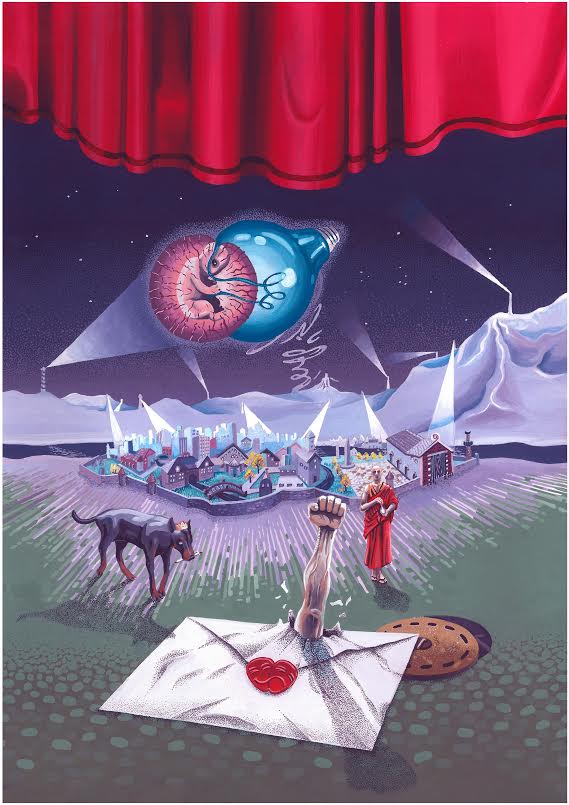
A word or two on Boris K.
Boris K. – The First Loser of Phenomenization
Some countries were ruled by the Inquisition. Others were subject to questionable privatizations. Boris K’s country was exposed to inexplicable phenomenizations. For Boris K, a man with no permanent occupation, phenomenization was so unexpected that he had no choice but to come to terms with it.
He got into different time periods without the use of a time machine. He found himself performing strangest of jobs without ever applying for them. He kept adapting to the situation, akin to a player advancing to the next level in an unpredictable computer game.
“What have I ever done to deserve the things happening to me?” Boris K. wondered. “I am no different than any other semi-skilled worker who got carried away by the idea of equality in our Republic. I enthusiastically neglected to further my education for the sake of blind faith in “better times” when the voice of the small, the ordinary, and the nameless would be heard as well.”
Boris K. was prepared to endure greatest of sacrifices in order to achieve this goal. As one of the deserving participants at the end of the great Revolution he was offered great benefits – which he promptly refused with utter disgust. It was against just such privileges that he had fought in the first place, he claimed, hence benefiting from them would be contrary to his beliefs. So he settled for an assembler’s job on a car factory production line, where he happily worked 12 hours a day fitting mirrors on the passenger doors.
One day he was laid off. Introduction of new technologies and reductions in work force, or at least that was what he was told; he was well aware the real cause lay in that ultimate evil slowly but surely corroding the fabric of humanity – the profit. Disposed of like an exhausted battery, empty hearted and with eyes full of tears, he moved from his humble but furnished apartment to the so-called “Lepers’ Valley”. The place was nicknamed for its inhabitants: hardly true lepers, but merely desperate souls befallen by a fate similar to Boris’ own. It was dubious in which of the two skins they would have thought themselves better off. The ancient buildings huddling together in irregular patterns, the abodes of unhappy families, were not made of concrete reinforced with Pittsburgh steel; they were built with eco-bricks with insulating layers of pure asbestos, which almost certainly guaranteed the tenants a case of lung cancer. As if there was not enough trouble in their lives.
It was in such a building that Boris K. found his new apartment. It was not the vacancy ad that attracted him, but rather the unusual appearance of the landlady – who was in a habit of swatting at the heads protruding from the adjacent manholes using the highest-circulating newspapers of the City.
“Like swatting flies,” thought Boris K, eyes fastened on a greasy rosary. Frau Suzy (as the landlady was called) and Boris K. exchanged just one glance and immediately recognized each other. Brushing his graying hair back, Boris K inquired about the price. The Frau leveled one measuring, scornful look at him, flicking the ash from her cigarette holder straight onto his hole-pocked shoe. Boris K glanced at her defiantly. Frau’s response came in a raspy, ancient voice.
“Ha!”
It was a mantra that meant one thing and one thing only and was uttered by the old woman only on the rarest of occasions. Boris K. liked mature blondes with an attitude, so he decided he would start his mission in that very unfortunate place.
Mission? What mission?
You will find out soon enough.
* Phenomenization, phenomenosition, from fenomenon (gr. φαινόμενо, occurence), something observable but utterly mysterious and untraceble, and better kept that way.
PHENOMENIZATION
from
Res Publicus Phenomesationem The people of the Republic have fathomed the secret of the phenomenization by the agency of a mysterious clairvoyant gammer: since the Parliament was hit by a lightning at the moment when there were 111 storks on the roof, 222 members in the building and 333 rants under the foundation – the famous phenomenization occured. The thoughts of storks, rats and Members of Parliament commingled in the air and fell to the ground. Thus certain individuals realized they preferred living in the sewer, others keep trying to fly and carry babies, while the rest just keep babbling about politics. Anything is possible in the land of phenomenization.
My interview at “Afirmator”, an art and social issues (questions) magazine, Belgrade, interview conducted by Tamara Lujak
http://afirmator.org/leila-samarrai-dobar-pisac-je-onaj-koji-se-ne-boji-da-progovori/
Majstor kratke priče, Leila Samarrai objavljivana je i nagrađivana mlada autorka. Voli da piše, živi za književnost, sanja o tome da, poput američkih pisaca, ima svog menadžera. Inspirisana Montipajdonovcima, Čaplinom, svakodnevnom situacijom u našoj zemlji, stvara britke, šaljive, satirične priče, pune oslobađajućeg jeda i gorčine. Uronite za trenutak u njen svet.

Šta je zadatak pisca?
Zadatak pisca je da dobro piše i to je sve. Čini mi se da je to udarna teza Josifa Brodskog.
Zašto pišete?
Iz zadovoljstva, i zato što smatram da imam šta da kažem.
Odakle crpite ideje?
Jednostavno je, ja kad lupim šakom o sto, pojavi se duh iz čarobne lampe, pokloni mi se i kaže: „Izvol’te, o Magistra Ludi!“ Tad izrazim svoju želju koja mi istog trena biva ispunjena.
Šta je dobra poezija/umetnost i kako biste definisali pesničko umeće?
Umetnost je igra. Poezija je igra. Na kraju dana, ili znaš da se igraš ili ne…
Šta je za vas dobar pisac?
Dobar pisac je onaj koji se ne boji da progovori; onaj koji diktira umetnost pisane reči. Pisac koji škraba i samo ćuti i kupi hvalospeve nije ništa do dokoni čitalac. Onaj kome pisana reč ističe kroz rane u svet i pada na papir, ne libi se da da i kritiku i hvalu, tome stremi.
Šta je za vas književnost i svrha umetnosti?
Preživljavanje ljudskog roda.
Kako ste došli na ideju da napišete Borisa K („Everest media“, Beograd, 2013)?
U doba apsurdnih događaja u Srbiji, koji idu protiv zdravog razuma, nije bilo teško doći na ideju, da se u duhu Monti Pajtona, pa možda i Čaplina ili NF putnika kroz prostor i vreme, napiše apsurdna satira koja bi reflektovala stvarnost u baba Valentininom ogledalu. Pajtonovske burleske u sprezi sa kafkijanskom atmosferom na šta prvo sugeriše ime junaka, samo su neke od referenci koje grade atmosferu. Zašto kafkijanski? Zato što je Boris K. i pored svojih Džoni Bravo moći samo običan, mali čovek u sofisticiranom točkiću sistema koji melje sofisticirano, ali melje. Džoni Bravo efekat, mišice superheroja su deo komedije apsurda, jer hiperbole koje volim da koristim, ponekad i do krajnjih granica ne bih li išla na ruku apsurdu te ga naglasila, deo su komedije i komedija, da tako kažem, dobija na komičnosti.

Kako je delo nastalo?
Najpre, ako ne uzimamo u obzir naučne teorije o postojanju paralelnih svetova, u Srbiji danas takvoj kakva, nažalost, jeste, primećujemo da je za goli opstanak neretko neophodno da ljudi žive u nekoj vrsti vlastitih univerzuma, što bi Englezi rekli „deluded..“ Kreativniji razviju i do pet i šest uloga… Zar mnogi Minhauzeni ne nađoše utočište u svojim lažima? No, Boris K. nije lažov. On je nešto poput anti-zemlje. Podignut je na nivo univerzalnog junaka koji predstavlja sve ostale i date su mu, autorskom rukom, nesagledive moći, isto onako kako su mu svemoćnom rukom fenomenizacija u alternativnoj republici oduzete… Tako se Boris K. kreće kroz alternativno – istorijske svetove i njegova sudbina se razrešava u jednom SF satiričnom romanu koji je u procesu stvaranja, a sve pri susretu sa vanzemaljcima civilizacije br. 5. No, o tome nekom drugom prilikom…
Možemo li da očekujemo nastavak avantura Borisa K?
Kao neko kome je duža forma prirodan način izražavanja, priznajem da bi to bio veoma lak posao da nije veoma teško nekome kome racionalnost, matematička fokusiranost i dramaturška preciznost nisu jača strana, ali recimo da zahteva vreme da se fabula sklopi, odgovor je sledeći: biće, ideje su na svakom koraku (delim Platonov stav), možda ne tako brzo kao što bih želela. Boris K. nije samo kratka priča, on je sveprisutni avatar i portret nedisciplinovanog, premda dovitljivog kosmopolite. I zahteva samo najbolje sklopljenu fabulu, početak, zaplet, omiljenu mi peripetiju i duhovit rasplet s primesama gorke ironije na račun društva.
Na čemu trenutno radite?
Poput vajara dletom krešem jedan roman sastavljen od isprepletanih pripovesti boreći se za svaku rečenicu. Taj rad ne zahteva preciznost u smislu formirane fabule, on je sam po sebi fantazija po kojoj se budan hoda i mesečari. Roman odgovara mom pripovedačkom senzibilitetu koji se fokusira kako na radnju, tako i na nijansiranje karaktera i ima osobine magijskog realizma, te mi ide od ruke i beskrajno uživam u radu. Nadam se da ću njime ostaviti na dalekom severu, gde je lokacirana radnja, trag u snegu… za buduće naratore istoga žanra (magijske fantastike). Taj žanr oficijelno ne postoji, tačnije nije mu nadenut to ime. Postoji magiski realizam, ali ovo jeste roman iz oblasti magijske fantastike.
Savet mlađim piscima?
Ne idite utabanim stazama. Kršite šablone i setite se da je Kafka bio izuzetno nesiguran u sebe. Smatrao je da ne zna da piše, što je prikrivao histeričnim smehom (neka vrsta kompentzacije za stid) kada su ga prijatelji nagovarali da im naglas čita svoje radove. Takođe, pisao ih je pozno u noć. Ovaj savet ne morate poslušati, ako ste ranoranilac 
Milivoj Andjelkovic, the support letter
Proèitao sam vašu Samaru i iznenadio se kako je to dobro napisano sa
potpunim uvidom u lokaèni kolorit i psihu, a kao prièa potpuno razvijena i
obradjena, podsetila me je na Samerset Moma što je svakako kompliment.
“Bila jednom jedna republika” https://leilasamarrai.wordpress.com/2012/05/17/bila-jednom-jedna-republika-rim-sf-satira-1-deo/ sam pregledao, zadivio se naporu koji ste
uložili da svu tu istorijsku materiju savladate i da je obradite u savremenom, parodijskom i višeznaènom smislu.
Odlièno pišete i bilo bi šteta da to ostane poznato samo uskom krugu vaših
poznanika… Sve ostalo je pitanje sreæe, snalažljivosti, upornosti, eventualno provokacije.. I novca ako imate moguænosti da finansirate objavljivanje svojih knjiga, ili pronadjete sponzora…
Srdacno vas pozdravlja
Milivoj Andjelkovic
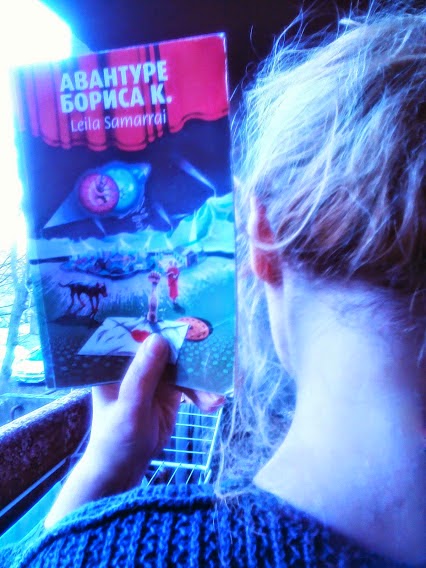
My interview at an art magazine “Afirmator”, interview conducted by Tamara Lujak
My interview at “Afirmator”, an art and socal issues (questions) magazine, Belgrade, interview conducted by Tamara Lujak https://belegbg.wordpress.com/
Majstor kratke priče, Leila Samarrai objavljivana je i nagrađivana mlada autorka. Voli da piše, živi za književnost, sanja o tome da, poput američkih pisaca, ima svog menadžera. Inspirisana Montipajdonovcima, Čaplinom, svakodnevnom situacijom u našoj zemlji, stvara britke, šaljive, satirične priče, pune oslobađajućeg jeda i gorčine. Uronite za trenutak u njen svet.
http://afirmator.org/leila-samarrai-dobar-pisac-je-onaj-koji-se-ne-boji-da-progovori/
WALK DOWN THE BOULEVARD, Leila Samarrai, “The Second Birth Of Tragedy”
 image found here
These streets will never be close to me.
The land is lonely, and the sky is
A dreamy shroud the color of the bloodied stone.
Wind taps on the bones,
The birds gnash with their fangs.
My imprisoned walk desultory from collisions
with revived pillars.
I walk the ghostly cage of felt
Which serves to soothe the birds
Lost in a dream, cumbersome, I grow
Amidst Necessity.
AFTER THE SHOT, Leila Samarrai “The Second Birth Of Tragedy”

image found here
Without any discomfort (except nausea)
In a suitcase I packed the cut out mask.
Underneath it indulgences , with instructions to be read at daybreak:
„I do not fear death, until the mortician.
They scheme around
The coffin. Stopple the tragedy like a sea-shell.”
(Tragedy is overrated. All the replicas
were soaked by the morning with the eyes of Maldives
in the counterpoint the waves summon:
„Odysseus defeated on the road by a troop of Cyclops.”
Beside absurd begins the strategy.
The wheels of the little machine drill,
She! Grinds the finger rolled in gunpowder with the trigger
Like in the dough,
Illuminates the brain with destructive noise.
May they fire, the clerk murderer should fire and all those others
Who will after the shot carry me out in pieces.
 Leila's blog